
India’s First Cyber Trojan Horse Installation Made from E-Waste Unveiled at Cocon 2026 in Kochi
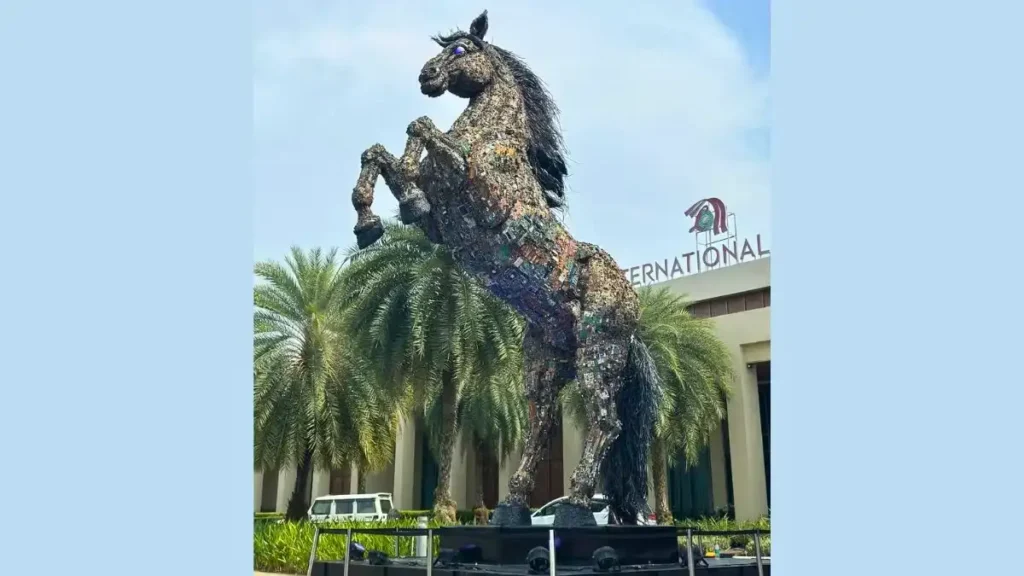
Inspired by the ancient Greek story of the Trojan Horse, the ‘Cyber Trojan Horse’ illustrates the hidden dangers of the digital world. This artwork demonstrates that threats can lie hidden even within files that appear trustworthy.
Kochi: A towering 25-foot sculpture made from discarded electronic components has become one of the major attractions at Cocon 2026, an international cybersecurity and hacking conference held in Kochi, Kerala.
Known as the Cyber Trojan Horse, the installation combines contemporary art, electronic waste recycling and digital security awareness to highlight the dangers of cyber deception.
Created by renowned artist Davinci Suresh, the sculpture uses approximately 700–850 kilograms of electronic waste and weighs more than two tonnes in total. Organisers have presented it as India’s tallest cybersecurity-themed art installation made from electronic waste. Its design draws a connection between the legendary Trojan Horse of Greek mythology and malicious software that can secretly enter digital devices under the guise of legitimate applications or files.
A Modern Interpretation of the Trojan Horse
The installation takes inspiration from the ancient Greek story in which soldiers concealed themselves inside a wooden horse to enter the city of Troy through deception. The concept has a modern parallel in cybersecurity, where Trojan malware disguises itself as trustworthy software to gain access to a computer or other digital device.
Through this artwork, the creators aim to make an otherwise complex cybersecurity threat easier for the public to understand. Instead of relying solely on technical explanations, the sculpture uses a familiar historical reference to draw attention to the risks associated with digital deception.
Unlike a traditional representation of a horse standing on four legs, Suresh designed the sculpture in a dramatic rearing position. Its imposing scale and distinctive appearance are intended to make it visually striking while reinforcing the warning behind the installation.
Built Using Discarded Electronic Components
One of the most distinctive features of the Cyber Trojan Horse is the extensive use of electronic scrap in its construction. The sculpture incorporates circuit boards, chips, diodes, electrical wires, keyboard keys and other components recovered from discarded consumer electronics.
According to the reports, keys collected from around 50 dismantled keyboards have been used to create the horse’s hooves. Hundreds of insulated electrical cables and wires form its mane and tail, while blue LED lights fitted into its eyes give the structure a futuristic appearance, particularly after dark.
The project also presented technical challenges because many electronic components are rigid and difficult to fit around curved surfaces. Large, flat computer motherboards were unsuitable for certain sections of the sculpture. To overcome this problem, the artist sourced smaller circuit boards and electronic parts from televisions and other consumer devices.
Most of the components were collected from electronic scrap recycling yards in Pattambi after searches across different regional markets. Protective chemical coatings and clear varnish were applied to help the installation withstand moisture and outdoor conditions.
Six Weeks of Work and a Complex Structure
The sculpture took approximately six weeks to complete at Suresh’s home studio in Kodungallur. Its internal framework consists of a 16-foot structure made from galvanised iron pipes and iron framing, supported by a heavy iron base measuring around three feet. Three layers of shaped fibreglass were added before the electronic components were attached.
Transporting the finished installation to the conference venue was another major challenge. To make the movement of the 25-foot structure manageable and reduce the risk of damage, it was divided into 12 sections. The sections were loaded onto four vehicles with the help of cranes and reassembled at the venue within a day.
Also Read :- Kerala Liquor Rules Under Scrutiny After Minors Allegedly Served Toddy in North Paravur
Kerala Police Cyberdome’s Role
The project emerged from discussions involving Kerala Police Cyberdome, artist collectives and the organisers of Cocon. Cartoonist Anoop Radhakrishnan helped connect Suresh with the conference organisers, while Ankit Asokan, Superintendent of Police (Cyber Operations), discussed the project with the artist and visited his workshop during fabrication.
The installation forms part of the conference’s wider effort to improve public understanding of cybersecurity threats and online exploitation. The event brings together participants interested in hacking, information security, digital protection and emerging cyber risks.
The 2026 edition of Cocon held its main conference on October 9 and 10, with additional training sessions scheduled around the event.
Could the Sculpture Find a Permanent Home in Fort Kochi?
The Cyber Trojan Horse is expected to remain at the Bolgatty venue until the conference concludes. Discussions are underway with Kochi Corporation authorities about relocating the installation permanently to Nehru Park in Fort Kochi. The proposal remains subject to the necessary administrative approvals.
The installation delivers a clear warning: much like the ancient Trojan Horse hid a threat beneath an innocent exterior, cyberattacks can be disguised as harmless files, applications or digital content. Recognising these hidden risks is essential to protecting oneself in an increasingly connected world.