
‘Women Should Stay at Home’ :Controversial Statement by Kerala Islamic Scholar Kanthapuram
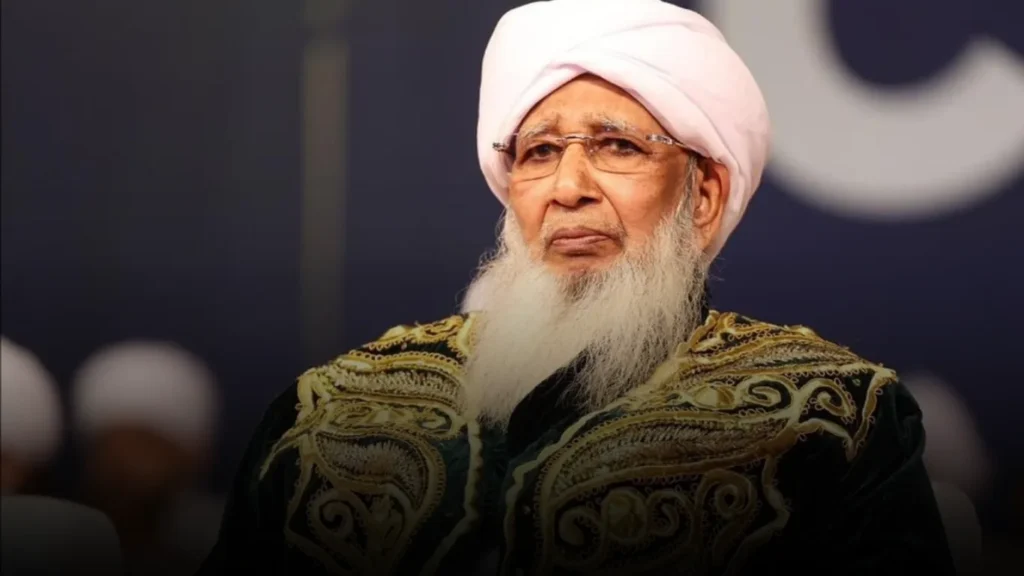
Kanthapuram’s remarks on women entering public life have sparked a debate over gender equality. Women leaders have questioned why women’s freedom should be restricted in the name of dignity and safety
Kochi: A controversial statement by Kanthapuram A.P. Aboobacker Musliyar, a prominent Islamic scholar in Kerala who is regarded as the Grand Mufti within sections of the Sunni community, has triggered a fresh debate over women’s role in public life. Speaking at an Islamic conference in Kochi, Kanthapuram said that women should remain within the confines of their homes and should not enter public life. Citing the practice of purdah in support of his argument, he said that bringing women onto public platforms could lead to “great destruction.”
His remarks came amid an ongoing debate in Kerala over a recent circular issued by Samastha Kerala Jamiyyathul Ulama, an organisation associated with his leadership. The circular had objected to the presence of women alongside men on public platforms and at other locations during religious and community programmes. Women leaders and social organisations subsequently criticised it as an attempt to restrict women’s participation in public life.
What Did Kanthapuram Say?
Speaking at the Hubbul Rasool conference in Kochi, Kanthapuram said that women should remain at home and should not enter the public sphere. He said Islam had prescribed the practice of purdah to protect the dignity and safety of women. According to him, this arrangement was intended to prevent what he described as the “great destruction” that could result from women appearing on public platforms.
In his speech, Kanthapuram also referred to the Quran and claimed that it instructs women to remain at home and not appear publicly.
He used the example of gold jewellery to explain his argument. Kanthapuram said that just as a gold chain is kept safely inside a box to preserve its beauty and value, women should also remain at home for their protection.
He also referred to a stone grinding wheel kept at a nearby shop. He said such an object could be placed by the roadside and people could walk around it or even step over it without making much difference. But if a gold necklace were left by the roadside, anyone passing by could touch it, which, he argued, could affect its beauty and value.
‘This Is Not Meant to Belittle Women’
Defending his statement, Kanthapuram said that asking women to remain at home was not intended to portray them as inferior. According to him, the purpose was to protect and respect women. He also claimed that Islam had historically granted women important rights.
During his speech, Kanthapuram referred to the practice of killing female infants or girls in pre-Islamic Arabia and said that Islam prohibited the killing of girls. He also mentioned women’s rights relating to property and inheritance.
His argument was that Islam elevated the status of women and that restrictions related to public life should also be understood from the perspective of respect and protection.
However, critics argue that calling for women to be excluded from public life in the name of dignity and safety does not align with modern democratic and egalitarian values.
Questions Raised Over the Use of the Word ‘Displayed’ for Women
The language used in the circular also came under political and social scrutiny. CPI(M) leader and former minister P.K. Sreemathy particularly objected to the use of the word “displayed” in reference to women.
She argued that describing a living person as something to be “displayed” itself reflects an objectionable mindset.
Sreemathy also asked Indian Union Muslim League MLA Fathima Thahiliya to clarify her position on the issue. She questioned how such restrictions on women’s public presence should be viewed.
She further argued that women have their own independent identity and existence, and that society should oppose any mindset that treats women as objects or merely as individuals occupying a subordinate role under someone else.
K.K. Shailaja Also Voices Opposition
CPI(M) leader and former minister K.K. Shailaja also reacted to the controversy. She described the thinking associated with the Kanthapuram faction of Samastha as outdated and deeply anti-women.
According to Shailaja, keeping women confined to their homes has historically been part of a feudal social system, and such thinking cannot be accepted in present-day Kerala.
Shailaja also highlighted the active participation of Muslim women in Kerala in education, politics, administration, law, medicine, technology and several other fields. Muslim women are also serving as elected representatives.
She argued that denying women a role in public life would amount to ignoring the progress women in the state have achieved.
Women and Child Development Minister Also Criticises Statement
Kerala Women and Child Development Minister Bindu Krishna also criticised Kanthapuram’s remarks. She said that advising women not to step outside their homes is unacceptable in today’s society.
Referring to women’s capabilities and achievements, she said girls across the country have demonstrated their abilities in various fields, including competitive examinations.
Her reaction came amid continuing discussions over gender equality and women’s freedom under constitutional rights. The minister emphasised that women and men enjoy equal rights and that a mindset that denies women freedom of movement and participation in public life cannot be accepted.
Kanthapuram Stands by His Statement
Despite the criticism, Kanthapuram has shown no signs of withdrawing his remarks. He said that Islamic scholars have been teaching this viewpoint for a long time and that leaders of Samastha have been expressing similar views for nearly 100 years.
According to him, such religious teachings have helped women maintain their “honour and dignity.”
Responding to criticism, he said that people who have studied Islam have a responsibility to speak on matters related to the religion. He made it clear that he would continue speaking on the issue despite opposition or criticism.
Kanthapuram also said that his organisation does not interfere in the religious practices of people belonging to other faiths. Similarly, he argued that Muslim religious scholars have the right to speak to members of their own community on religious matters.
Who Is Kanthapuram A.P. Aboobacker Musliyar?
Kanthapuram A.P. Aboobacker Musliyar is one of Kerala’s influential Sunni Islamic scholars. He is associated with Samastha Kerala Jamiyyathul Ulama and serves as its general secretary. He is also associated with the All India Sunni Jamiyyathul Ulama. Within sections of the Sunni community, he is referred to as the “Grand Mufti of India.”
However, “Grand Mufti of India” is not a constitutional or government-designated position. It is a religious title used in certain circles, and scholars associated with different Islamic institutions and traditions in India may hold their own institutional positions.
For this reason, Kanthapuram’s statement is not being viewed merely as a personal remark. His organisational position within Samastha, along with the recent circular, has turned the controversy into a broader debate over the social role of religious institutions and women’s participation in public life in Kerala.
The Issue Goes Beyond Purdah
It is also important to distinguish between the practice of purdah and women’s participation in public life. Different religious communities and traditions have different interpretations of dress and religious practices. However, the current controversy is not limited to the question of women’s clothing.
In his latest remarks, Kanthapuram objected specifically to women entering the public sphere and called for them to remain at home.
This is why critics view the issue as extending beyond personal religious beliefs to questions of women’s freedom, independence and participation in society.
On the other hand, Kanthapuram and his supporters argue that the remarks represent religious guidance for their community and fall within the right of religious scholars to interpret and communicate religious teachings. Officials associated with Samastha had previously described the circular as religious guidance for its followers and said that it did not introduce anything new.
Growing Divide Over Religious Discipline and Respect
Political and social reactions to Kanthapuram’s statement are continuing to emerge. Women leaders have defended the role of women in public life, while Kanthapuram has made it clear that he does not intend to back down from his religious interpretation.
The controversy initially began with a circular objecting to the presence of women alongside men at religious programmes and to certain forms of celebration considered non-Islamic. Kanthapuram’s latest remarks have now broadened the debate.
On one side, religious scholars are linking the issue to purdah, dignity and religious discipline. On the other, critics are questioning why ensuring women’s dignity and safety should require eliminating their presence from public life.
That question could remain at the centre of Kerala’s political and social debate in the coming days.
For now, it is clear that Kanthapuram’s remarks have moved beyond a controversy surrounding a single event. They have opened a wider discussion about religion, women’s rights, participation in public life and the limits of religious directives in a modern democratic society.