
Abhimanyu Murder Case Trial Begins After Eight Years; All 16 Accused Appear in Similar Attire and Masks
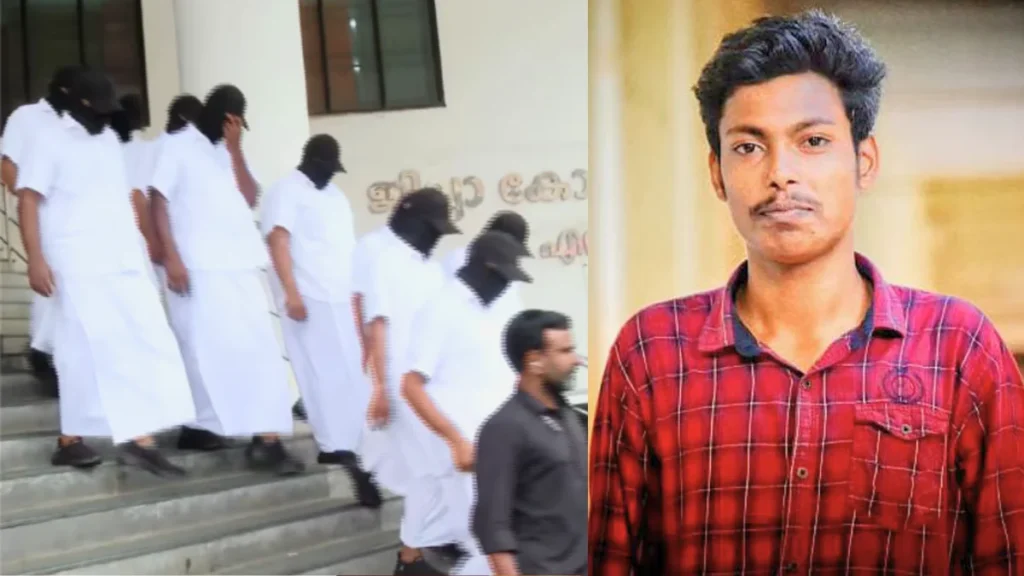
The trial in the 2018 Abhimanyu murder case began in Ernakulam on October 15, with witness examination underway. The Kerala High Court recently rejected pleas to halt proceedings pending further investigation.
Kochi: The trial in the 2018 murder of Abhimanyu, a student leader of the Students’ Federation of India (SFI) at Maharaja’s College in Ernakulam, began on Thursday, October 15, after nearly eight years.
Proceedings commenced at the Ernakulam Principal District and Sessions Court with the examination of witnesses. All 16 accused facing trial appeared before the court, drawing attention for arriving in similar clothing and wearing masks.
The accused wore white dhotis, white half-sleeved shirts and black shoes. Their similar hairstyles and attire reportedly made it difficult to distinguish them individually. They removed their masks when directed to do so by the judge.
The commencement of the trial follows a series of legal proceedings, including petitions seeking to suspend the case until investigations against other accused are completed. The Kerala High Court rejected those requests, allowing the trial against the 16 accused to proceed.
What Happened in 2018?
Abhimanyu, a native of Vattavada in Idukki district, was a second-year student at Maharaja’s College and an SFI activist associated with the organisation’s Idukki district committee.
He was stabbed to death in the early hours of July 2, 2018, during preparations for the beginning of the new academic year at the college. The incident reportedly followed a dispute involving political rivalry between SFI activists and members of the Campus Front student organisation over writing on campus walls.
According to the prosecution, the accused allegedly arrived at the campus armed with weapons, including knives, wooden rods and punching weapons, and attacked Abhimanyu. He sustained a stab wound to the chest and died at the scene.
The prosecution has alleged that the attack was part of a conspiracy linked to campus political rivalry. These allegations are part of the criminal proceedings and must be established through evidence and judicial findings.
Why Did the Kerala High Court Refuse to Halt the Trial?
A major legal question concerned whether proceedings against the 16 principal accused should remain suspended until investigations against 10 other accused were completed.
On July 14, 2026, the Kerala High Court dismissed a petition by five accused seeking to stay the trial before the Ernakulam Sessions Court. Justice G. Girish rejected the argument that continuing the trial while investigations against the remaining accused were pending would prejudice the proceedings against the principal accused.
The prosecution’s case distinguishes between the alleged roles of the two groups. The first 16 accused are alleged to have participated in the conspiracy and attack, while accused Nos. 17 to 26 are alleged to have sheltered or helped the principal accused evade arrest.
The court observed that the allegations against the two groups were different and that the pending investigation into the alleged harbouring of the principal accused did not, by itself, justify suspending their trial.
In a further development reported in October, the High Court also rejected pleas by accused Nos. 24 and 25, Najeeb and Shanavas, seeking to halt the trial until the investigation against the remaining accused was completed. The court declined to grant their request, allowing the proceedings to continue as scheduled.
Also Read :- Kerala Excise Cases Decline After Anti-Narcotics Squad Merges with State Bureau
Court Rejects Request for Closed-Door Proceedings
Before the trial began, the accused also sought an in-camera hearing, which would exclude the general public and media from courtroom proceedings.
The Ernakulam Principal Sessions Court rejected the request in September, ruling that the apprehensions cited by the accused did not justify departing from the principle of open court proceedings.
13 accused had sought restrictions on public and media access and on photographing them. They argued that sustained media coverage, public discussion and the presence of Maharaja’s College students near the court could affect the fairness of the proceedings and the independence of witnesses.
Trial Schedule and Witness Examination
The court had planned a time-bound schedule for recording witness testimony. According to Onmanorama, the prosecution’s witness list contains 156 witnesses, with examination scheduled to be completed within 18 working days, by November 12, 2026.
The schedule follows repeated judicial efforts to prevent further delays. Abhimanyu’s mother had approached the Kerala High Court, expressing concern over the prolonged pendency of the case and seeking an expedited trial.
In August 2026, the High Court directed the Sessions Court to complete the proceedings within four months. This followed earlier directions to accelerate the trial, which had not been completed within the previously stipulated periods.
Next Steps in the Eight-Year-Old Murder Case
With the trial now underway, the prosecution is expected to present witness testimony and other evidence supporting its case against the 16 accused. The defence will have the opportunity to challenge the prosecution’s evidence through the procedures available under criminal law.
The investigation concerning the other 10 accused remains a separate issue. The courts have so far declined to make its completion a precondition for continuing the trial against the 16 accused already facing proceedings.
The case’s long delay has made the start of witness examination a significant development for Abhimanyu’s family and those following the proceedings. Yet the commencement of the trial should not be confused with a verdict: the allegations must still be tested in court, and the accused are entitled to a fair trial.