
25 Years of 9/11 Attacks: 4 Planes, 19 Terrorists and 2,977 Deaths! The Morning That Changed America and the World Forever
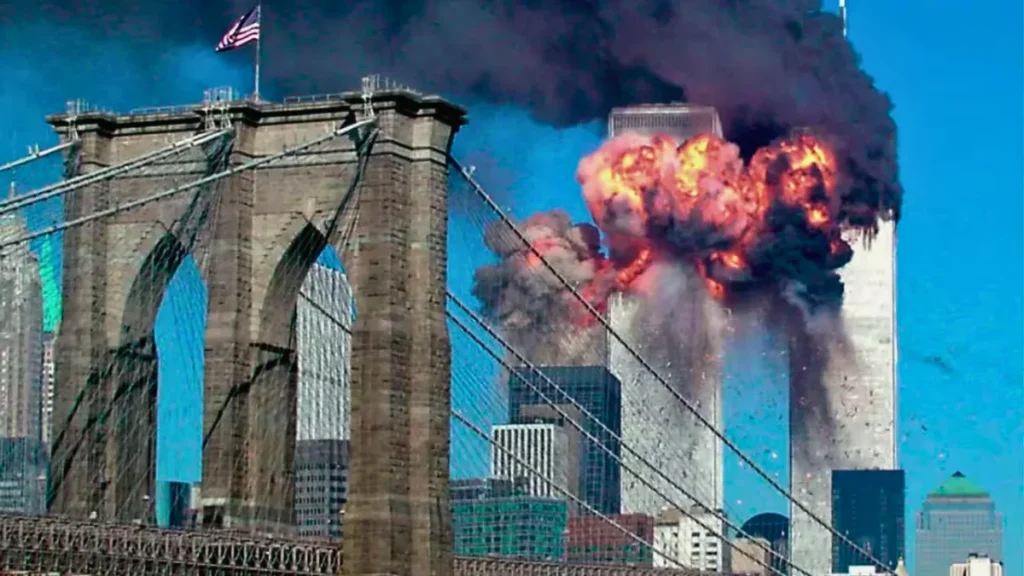
Nineteen terrorists linked to al-Qaeda hijacked four commercial passenger planes and carried out the 9/11 attacks. Here is how the plot was prepared, how the hijackers received flight training, entered the US and carried out the deadliest terrorist attack on American soil.
New York, USA: The morning of September 11, 2001, began like any other day in the United States. People were heading to work, planes were flying across the country and thousands of employees were inside the twin towers of the World Trade Center in New York.
No one knew that within a few hours, the country would face an attack that would change global politics, security and the fight against terrorism for decades.
At around 8:46 a.m., American Airlines Flight 11 crashed into the North Tower of the World Trade Center. Initially, many believed it was an accident. But 17 minutes later, another plane struck the South Tower, making it clear that the US was facing a coordinated terrorist attack.
Soon after, a third plane crashed into the Pentagon, while a fourth plane went down in a field near Shanksville, Pennsylvania.
Today, September 11, 2026, marks 25 years since the attacks. A quarter of a century later, 9/11 remains one of the most consequential events in modern history, reshaping US foreign policy, airport security, counterterrorism and international relations.
What Happened on September 11, 2001?
Nineteen al-Qaeda-linked terrorists hijacked four commercial passenger planes as part of the coordinated attacks.
Two aircraft were deliberately flown into the twin towers of the World Trade Center in New York. A third was crashed into the Pentagon, the headquarters of the US Department of Defense, near Washington, DC.
The fourth aircraft, United Airlines Flight 93, was heading toward Washington. After learning through phone calls about the attacks in New York and Washington, passengers and crew members attempted to regain control of the plane.
Their effort did not succeed, but the aircraft never reached its intended target. It crashed near Shanksville, Pennsylvania.
Everyone aboard the four planes was killed. Thousands of people on the ground also lost their lives, including civilians, firefighters, police officers and other emergency workers.
The Morning That Changed the World Trade Center
American Airlines Flight 11 took off from Boston’s Logan International Airport at 7:59 a.m. It was bound for Los Angeles. At around 8:46 a.m., it crashed into the North Tower of the World Trade Center.
United Airlines Flight 175 took off from Boston at 8:14 a.m., also bound for Los Angeles. At around 9:03 a.m., it struck the South Tower.
After the second impact, it became clear to people watching the events unfold that the crashes were not accidents but part of a planned terrorist attack.
A massive cloud of smoke rose over lower Manhattan. Television channels began broadcasting live images from the scene as people tried to escape the buildings and firefighters and emergency workers rushed inside to rescue those trapped.
The North and South Towers eventually collapsed, turning the World Trade Center complex and surrounding area into a vast field of debris.
Attack on the Pentagon
While New York was under attack, another hijacked aircraft was heading toward Washington.
American Airlines Flight 77 departed Dulles International Airport at 8:20 a.m. for Los Angeles. After being hijacked, the plane was turned toward the Pentagon.
At around 9:37 a.m., Flight 77 crashed into the Pentagon, killing everyone aboard and people inside the building.
The attack showed that the terrorists were not targeting only New York’s financial centre. They were also attacking major symbols of American political and military power.
Flight 93 and the Passenger’s Final Attempt
The fourth aircraft was United Airlines Flight 93. It departed Newark Airport at 8:41 a.m. for San Francisco.
After the plane was hijacked, passengers learned about the attacks through phone calls with people on the ground. Some passengers and crew members then decided to fight back and attempt to regain control of the aircraft.
The effort ultimately failed, but the plane crashed into a field near Shanksville, Pennsylvania, before reaching its suspected target.
The actions of the passengers and crew of Flight 93 have since been remembered as one of the defining stories of courage and sacrifice on September 11.
How Many People Died in 9/11?
A total of 2,977 people were killed in the September 11 attacks, excluding the 19 hijackers. The victims included passengers and crew members aboard the four aircraft, people inside the World Trade Center and Pentagon, civilians in the surrounding areas and emergency responders.
New York suffered the highest number of casualties.
Among the emergency workers who died were 343 members of the New York City Fire Department, 23 New York Police Department officers and 37 Port Authority police officers.
The human cost of 9/11 did not end on September 11, 2001. Many first responders and others exposed to the toxic environment at Ground Zero later developed serious illnesses, leading to additional deaths in the years that followed.
Who Was Behind the Attacks?
The attacks were carried out by al-Qaeda, which was led at the time by Osama bin Laden.
The 19 hijackers took control of four aircraft and used them as weapons against targets in New York and near Washington.
Before 9/11, al-Qaeda had already carried out attacks against US interests, including the 1998 bombings of American embassies in Kenya and Tanzania and the 2000 attack on the USS Cole.
Osama bin Laden had been considered a major terrorist threat by the United States for years. After 9/11, the US launched a global campaign against al-Qaeda and began a long search for bin Laden.
Nearly a decade later, on May 2, 2011, US special forces killed Osama bin Laden in Abbottabad, Pakistan.
How Were the Attacks Planned and How Did the Hijackers Receive Flight Training?
The 9/11 plot was prepared by al-Qaeda over an extended period. The 19 hijackers were divided into four teams, with each group taking control of one aircraft.
Four of the hijackers had received flight training and were responsible for flying the aircraft after the planes were taken over. They included Mohamed Atta, Marwan al-Shehhi, Hani Hanjour and Ziad Jarrah.
Mohamed Atta was regarded as the central operational planner of the plot.
Several of the hijackers received flight training in the United States. They learned to fly small aircraft and developed basic aviation and cockpit skills that later helped them take control of the commercial planes.
Investigations after the attacks also found that some suspicious activities had been noticed by different agencies and institutions. However, the information was not effectively shared across the US intelligence and security system.
How Did the Terrorists Enter the US?
According to the 9/11 Commission Report, most of the 19 hijackers entered the United States using valid passports and US visas.
They arrived at different times and, in many cases, went through immigration procedures like other international travellers. However, investigations later uncovered irregularities involving their travel, visa applications and stay in the country.
Some had provided inaccurate or misleading information in visa applications, while others violated immigration rules after entering the US.
One of the major findings of the 9/11 Commission was that US intelligence and security agencies had failed to effectively share important information.
Different agencies possessed pieces of information about suspicious activities, but those details were not always connected or communicated in time.
Following the attacks, the US significantly changed its visa screening, immigration procedures and intelligence-sharing systems.
What Changed in America After 9/11?
The attacks triggered a major transformation of US national security policy.
The administration of President George W. Bush launched a global campaign against terrorism. On October 7, 2001, the United States began military operations in Afghanistan, with the stated goal of targeting al-Qaeda and removing the Taliban government, which had provided shelter to Osama bin Laden and his organisation.
Security inside the United States also underwent major changes.
Airport screening became stricter, intelligence coordination was strengthened and new measures were introduced to prevent similar attacks.
The Department of Homeland Security was later established, while the country’s intelligence and security structures underwent extensive reforms.
How 9/11 Changed Airport Security Worldwide
Today, strict airport screening, identity checks, baggage inspection and restrictions on items carried onto aircraft are considered normal.
Before 9/11, however, aviation security was significantly different from what passengers experience today.
The attacks also changed the way authorities viewed aircraft hijacking. Before 9/11, traditional hijacking scenarios were generally associated with hostage-taking or negotiations.
After the attacks, security agencies had to consider the possibility that a hijacked aircraft itself could be used as a weapon.
The 9/11 Commission found that the existing hijacking response system was largely based on the traditional understanding of hijackings and was not prepared for the possibility of suicide attacks using commercial aircraft.
How the ‘War on Terror’ Changed Global Politics
After 9/11, terrorism became far more than a law-and-order issue. It became a central concern of international politics and military strategy.
The United States launched operations against al-Qaeda and targeted networks accused of supporting terrorist organisations. The war in Afghanistan continued for years.
The consequences extended far beyond Afghanistan and the United States. US foreign policy changes after 9/11 influenced politics and security policies across the Middle East and South Asia.
Countries around the world increased intelligence cooperation, strengthened counterterrorism laws and reassessed their own security systems.
Ground Zero Became a Place of Remembrance
The site where the World Trade Center towers once stood is now home to the 9/11 Memorial & Museum, dedicated to remembering those who lost their lives in the attacks.
Every year on September 11, victims’ families gather at the memorial and read out the names of those who died.
On the 25th anniversary this year, a special remembrance ceremony was held. The programme began at 8:30 a.m., followed by the first moment of silence at 8:46 a.m., marking the time when the first plane struck the North Tower.
This year’s ceremony included seven moments of silence, remembering the attacks on the two towers, their eventual collapse, the Pentagon and the crash of Flight 93.