
Kozhikode Aboobacker Dead: ‘Sultan of Mappila Songs’ and Composer of 3,000 Melodies Passes Away at 80 After Stroke
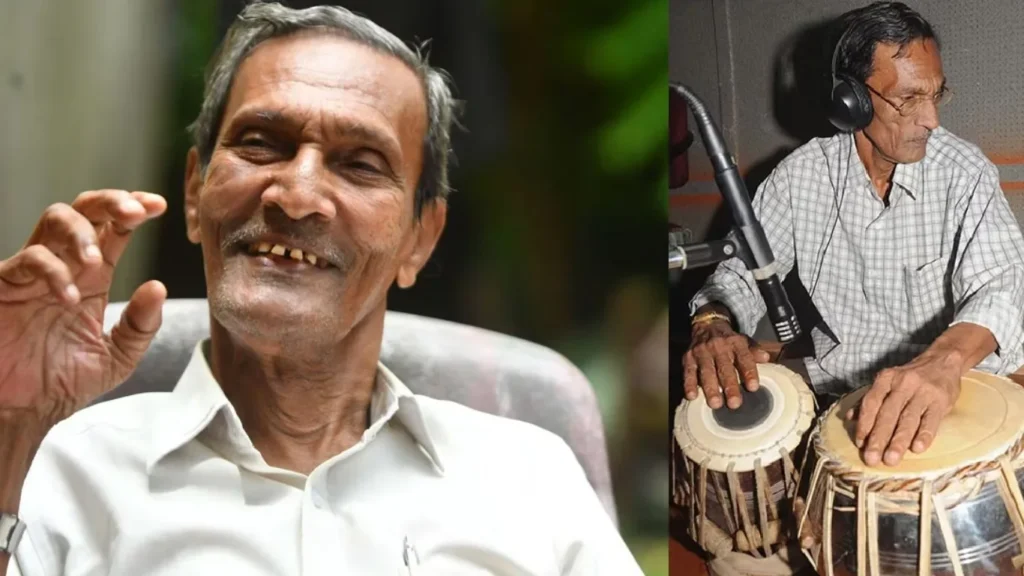
Composer of over 3,000 Mappila melodies who worked with Yesudas, Chithra and Devarajan dies at 80 after a stroke
Kozhikode Aboobacker, lovingly known across Kerala as ‘Avukkakka’ or ‘Avukka’, died at his home in Ullisseri Kunnu, Areekad, Kozhikode, around midnight on Monday, August 31, and Tuesday, September 1, 2026. He was 80. Aboobacker worked as a composer, singer and master tablist and played a major role in shaping modern Mappilapattu for more than five decades.
Aboobacker suffered a stroke in July and remained bedridden for nearly two months. Even two days before he became completely immobile, he sat on the veranda of his home and composed a new melody. That final composition reflected his lifelong dedication to music.
His family held his burial later on Tuesday at Manthottam Kabarstan after the final prayers at Manthottam Juma Masjid. He is survived by his wife, K.V. Zubaida, and children Ghulam Ali, Roshni, Femina and Sajina. His son Fayas died before him.
Chief Minister V.D. Satheesan called Aboobacker’s death a major loss for Kerala’s cultural world. He said Aboobacker created a distinct era in Mappilapattu and connected the genre with several generations through his unique melodies.
THE FINAL MELODY: A LIFE DEVOTED TO MUSIC
In the days before his final illness, preparations were underway to release Eenangalude Sulthan (Sultan of Melodies), a book by Hameed Koliyadukkam about Aboobacker’s life and musical career. Aboobacker had hoped that singer K.S. Chithra and the Chief Minister would attend the launch. However, organisers cancelled the event after his health became critical. The book now serves as an unintended tribute to a musician who continued composing almost until his final days.
FROM SCHOOLBOY SINGER TO BABURAJ’S TROUPE
Aboobacker grew up in a modest family in Kozhikode. His father, Imbichi Ahammad, worked as an iron merchant at Valiyangadi, while his mother was Khadeeja. He studied with and developed a lifelong friendship with the late actor Mamukkoya.
Aboobacker’s musical journey began at school. One day, a teacher asked the students if anyone could sing. Mamukkoya pointed towards his friend. Aboobacker then sang for the class. T. Usman, the favourite tablist of legendary composer M.S. Baburaj, happened to hear him. That chance meeting changed Aboobacker’s life. Usman introduced him to Baburaj’s musical troupe.
Aboobacker initially joined the troupe as a singer. His pure, high-pitched voice suited the female roles that singers often performed at that time. As his voice changed during adolescence, he taught himself to play the tabla. He later became a leading tablist for popular orchestras such as Sukumarans, Huttons and Brothers. He also worked with theatre groups linked to K.T. Mohammed and Kaladi Gopi. When Baburaj became more involved in film music, Aboobacker continued to work as his trusted accompanist.
THE MAN WHO GAVE MAPPILAPATTU A MODERN SOUND
Mappilapattu represents the distinctive Muslim folk-song tradition of Malabar. The genre uses Arabi-Malayalam and explores devotion, romance, history, everyday life and Sufi emotions. For centuries, people mainly performed Mappilapattu within community spaces. Aboobacker helped take the tradition beyond those boundaries.
More than almost any other composer of his generation, he gave Mappilapattu a modern melodic style while keeping its traditional character intact. His music connected with people across religious and regional communities.
Over several decades, Aboobacker composed more than 3,000 songs. His melodies became an important part of stage programmes, cultural broadcasts, cassette and CD albums and, later, Mappilapattu reality shows. Many people considered his compositions an essential part of Mappila music programmes.
Aboobacker combined traditional Malabar folk rhythms and the emotional style of Arabi-Malayalam lyrics with detailed but easy-to-sing melodies. This approach helped his songs sound both traditional and fresh. It also made them easy for singers and audiences to remember.
HITS THAT DEFINED GENERATIONS
Two of his songs remain especially popular:
- “Karayanum Parayanum Manamthurannirikkanum”, often remembered simply as “Karayanum Parayanum”, became popular in the voice of K.J. Yesudas. The song expresses deep longing and surrender and continues to appear in social-media covers even decades after its release.
- “Yatheeminathani”, also remembered as “Yatheemin Thaane…”, became a memorable song through K.S. Chithra’s voice.
His other popular songs include “La Ilaha Illallah”, “Pakalanthi Njan” and “Padan Njan Gayakan Alla”. Almost every major Malayalam playback and light-music singer of the past four decades has sung one or more of his compositions. The list includes Yesudas, Chithra, M.G. Sreekumar, Sujatha, G. Venugopal, Minmini, Afsal and Shahabaz Aman. He also developed a particularly successful musical partnership with lyricist Bappu Velliparamba.
Many songs that continue to appear on competition stages and at family gatherings came from Aboobacker’s compositions. However, many listeners did not know that he had created their melodies. Aboobacker himself once said that he no longer had a complete list of all the songs he had composed.
THE QUIET MASTER BEHIND THE RHYTHM
Aboobacker achieved great skill not only as a composer but also as a tablist. He became the preferred rhythm accompanist for two major figures in Malayalam film music, G. Devarajan Master and Bombay Ravi, during important recording sessions.
His colleagues and students remembered him as a quiet and dignified person with a gentle sense of humour. He remained completely focused on his music and craft. During his final days, only his family members and a few of his favourite students stayed close to him.
A BOOK LEFT UNFINISHED, A LEGACY THAT LIVES ON
The book Eenangalude Sulthan aimed to record a career that covered the golden period of Malayalam light music as well as the continuing popularity of Mappilapattu on stages and screens. Although Aboobacker could not attend its planned launch, the book will help future researchers and music lovers understand the scale of his contribution.
His melodies, many of which came out decades ago, continue to receive views and shares on digital platforms. Young singers still perform covers of his songs, while reality-show contestants continue to choose them for competitions. Families in Kerala and the Gulf also continue to sing his songs in their homes.
Aboobacker never chased the fame that many film music directors received. Instead, he remained connected to the culture and musical traditions of Malabar. He worked mainly within Mappilapattu but expanded its emotional and melodic range and helped the music reach a much wider audience.
Through his work, Aboobacker earned the affectionate title of the ‘Sultan of Mappila Songs’ among Malayalis.
Aboobacker may be gone, but his melodies continue to live on. They still make listeners feel deeply, express their emotions and open their hearts — just as one of his most famous songs promised.